

What Is DFM in CNC Machining? A Complete Guide for Engineers and Buyers
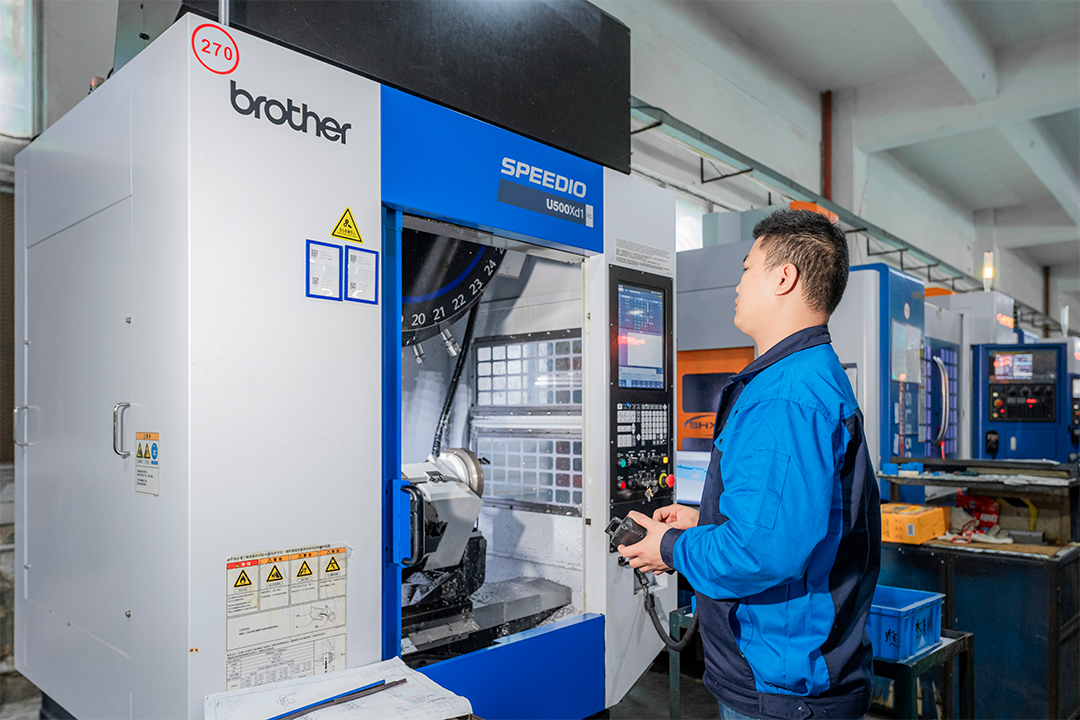
Design for Manufacturability (DFM) is one of the most important, yet most overlooked, steps in CNC machining. Whether you are an engineer, industrial designer, product developer, or procurement professional, understanding DFM can dramatically improve the efficiency, cost, quality, and speed of your CNC machining projects.
In today’s competitive manufacturing landscape, CNC machining is used across industries such as aerospace, automotive, robotics, medical devices, semiconductors, electronics, and industrial automation. While engineers focus on design performance, machinists emphasize manufacturability. DFM bridges these two worlds, ensuring that a part is both functional and cost-efficient to manufacture.
If you are currently working on a CNC machining project and want to improve manufacturability, you can get a free DFM review and CNC machining quote from our engineering team by sharing your drawings.
This comprehensive guide explains what DFM is, why it matters, how it works in CNC machining, and how you can apply it to your next project to reduce costs and lead times while improving product quality.
What Is DFM in CNC Machining?
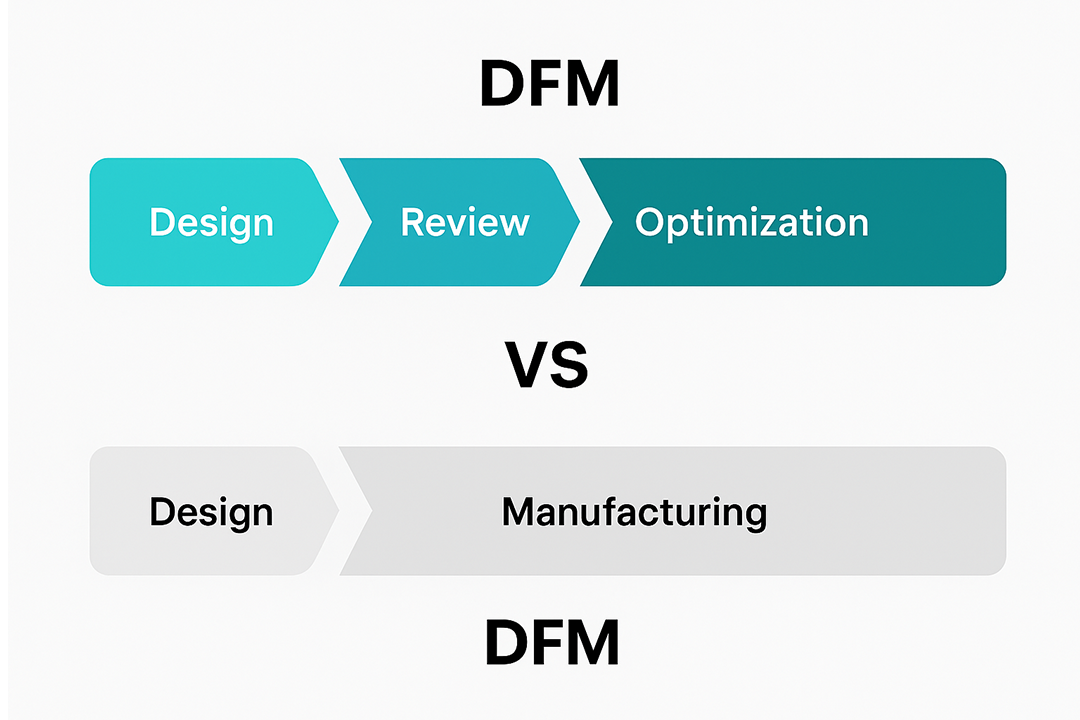
DFM (Design for Manufacturability) in CNC machining refers to the engineering process of adjusting a part’s design so that it can be efficiently, accurately, and economically manufactured using CNC equipment. This means designing parts that align with CNC machine capabilities, tool geometries, material behavior, and production workflows.
Key Goals of DFM in CNC Machining
DFM aims to:
- Simplify the design for easier machining
- Reduce unnecessary complexity
- Avoid features that are difficult or costly to make
- Optimize tolerances and surface finishes
- Minimize tool changes and setups
- Improve part stability and quality consistency
- Reduce machining time, material waste, and total cost
Good DFM produces parts that perform well and are cost-effective to manufacture at scale.
Why DFM Matters in CNC Machining
DFM is essential because design decisions directly influence every stage of manufacturing, including cycle time, tooling requirements, programming time, scrap rate, and even inspection costs.
Without DFM, engineers may unintentionally design parts with:
- Deep, narrow pockets that require slow machining
- Sharp internal corners impossible to cut with round tools
- Extremely tight tolerances that are unnecessary
- Very thin walls that deform during machining
- Complex 5-axis features that offer little functional value
These issues lead to:
- Higher machining cost
- More setups and tool changes
- Higher scrap and rework rates
- Delayed delivery
- Poor consistency
With proper DFM, these risks can be avoided early in the design stage.
Core DFM Principles for CNC Machining (Best Practices)
Below are the most critical DFM principles you should follow when designing CNC machined parts. As you review these guidelines, remember you can always submit your CAD files for a free DFM check and manufacturing feasibility review to validate your design before production.
1. Optimize Geometry and Part Features
Avoid deep, narrow pockets
Deep cavities require long, flexible cutting tools, slower feed rates, and multiple passes.
DFM tip: keep cavity depth ≤ 4× cutter diameter when possible.
Use internal radii instead of sharp corners
CNC tools are round, so sharp internal corners require time-consuming rest machining.
Recommended:
- Add fillets (R1–R3 mm)
- Use fillet radius equal to or larger than tool radius
This reduces machining time and improves tool life.
Avoid thin walls
Thin walls cause vibration, chatter, bending, and poor dimensional accuracy.
Recommended wall thickness:
- Metals: ≥ 0.8–1.0 mm
- Plastics: ≥ 1.5–2.0 mm
Avoid unnecessary 5-axis features
Complex angles or undercuts significantly increase machining difficulty unless functionally required. If a design can be produced by 3-axis or 4-axis machining, it will usually be more economical.
2. Choose Reasonable Tolerances
Over-tight tolerances are one of the biggest drivers of CNC machining cost.
DFM tolerance principles:
- Apply tight tolerances only on critical features (mating surfaces, sealing faces, precision fits)
- Use standard tolerances where possible (for example, ±0.1 mm or ISO 2768 medium)
- Avoid “tight everywhere” unless absolutely necessary
This reduces machining time, inspection costs, and scrap.
3. Choose Materials with Good Machinability
Different metals and plastics vary greatly in machinability.
Good machinability materials
- Aluminum 6061 / 7075
- Brass
- Mild / free-cutting steel
- Engineering plastics like POM, ABS
More difficult materials
- Stainless steel 304 / 316
- Titanium alloys
- Inconel and other superalloys
- Hardened tool steel
Choosing a highly machinable material (when suitable for your application) can reduce cost by 20–60% and shorten lead time.
4. Minimize Tool Changes and Setups
Each setup requires fixture preparation, alignment, and manual labor.
A part requiring multiple setups or special tools increases cost and risk.
DFM tip:
- Design parts that can be machined in 1–2 setups whenever possible
- Minimize the number of required tools and custom cutters
- Avoid extreme tool reach that forces special tooling or very slow machining
This improves efficiency and reduces the chance of dimensional variation between setups.
5. Simplify Features for Faster, More Stable Machining
Avoid or minimize:
- Micro-sized features that require extremely small tools
- Super-deep drilled holes with high aspect ratios
- Very long threads where shorter engagement is sufficient
- Razor-sharp edges that are difficult to deburr
- Unnecessarily complex 3D shapes that don’t improve function
Simplifying features can make the part easier to machine without affecting its performance. If you are unsure whether a feature is practical, you can ask your CNC supplier for DFM feedback before freezing the design.
Benefits of Applying DFM in CNC Machining
Applying DFM brings measurable improvements in cost, speed, and quality.
1. Lower Cost
DFM can reduce total machining costs by 15–50% through:
- Fewer setups and operations
- Faster cycle times
- Less tool wear and breakage
- Lower scrap and rework rates
- Reduced inspection and reworking
2. Shorter Lead Times
DFM reduces machining complexity, which leads to:
- Shorter CAM programming time
- Simpler fixturing
- Faster machining
- Smoother inspection
As a result, your parts move from design to delivery much faster.
3. Higher Quality and Consistency
By improving part stability and avoiding marginal designs (thin walls, extreme cuts, etc.), DFM enhances dimensional consistency across prototypes and production runs.
4. Easier Mass Production
DFM-ready designs with consistent wall thickness, standard features, and stable setups scale better when moving from prototypes to low-volume and high-volume production.
Common Mistakes When Ignoring DFM
Engineers and buyers often see these problems when DFM is not considered early enough:
Over-tight tolerances everywhere
Specifying extremely tight tolerances on non-critical features:
- Increases machining and inspection time
- Requires more expensive machines and setups
- Raises the risk of scrap and rework
Very thin walls
Thin walls may vibrate, deform during machining, or warp after release from the fixture, making it hard to achieve the desired dimensions.
Deep cavities or sharp corners
Deep, narrow pockets and sharp internal corners are difficult and time-consuming to machine. They often require long tools, special strategies, and slow feeds.
Poor material selection
Selecting a hard-to-machine material when a more machinable alternative would work leads to longer machining times, higher tool wear, and higher cost.
No early communication with the manufacturer
If the design is finalized before the CNC supplier reviews it, manufacturability issues may only appear during machining, forcing redesigns, delays, and added cost. To avoid this, it’s best to request a DFM review together with your initial quotation.
How to Apply DFM to Your CNC Project (Step-by-Step Workflow)
Step 1 — Start With a Manufacturable Design
Before sending your CAD files out, review:
- Wall thickness
- Internal radii
- Overall part size and features
- Tolerances and surface finishes
Using internal DFM checklists or CAD-based DFM tools can help catch problems early.
Step 2 — Collaborate Early With Your CNC Manufacturer
Share 3D models and 2D drawings with your CNC partner before locking the design.
Ask them to:
- Flag risky features (deep pockets, thin walls, sharp corners)
- Suggest alternative geometries or processes
- Advise on achievable tolerances and suitable materials
Many professional CNC shops, including ours, offer free DFM feedback as part of the quotation process, especially for prototypes and new projects.
Step 3 — Optimize the Design
Based on DFM feedback, adjust:
- Geometry: simplify shapes, add fillets, reduce extreme features
- Tolerances: tighten only where necessary
- Materials: select a better balance between performance and machinability
- Features: eliminate non-functional details that add cost
Step 4 — CNC Programming and Simulation
Once the design is DFM-optimized, the CNC team:
- Creates tool paths in CAM software
- Simulates machining to check for collisions, tool reach problems, or excessive tool deflection
- Finalizes fixturing and setup strategy
This step confirms that the design can be machined efficiently and safely.
Step 5 — Prototype and Validate
Run a prototype or small batch to:
- Verify dimensions and tolerances
- Check form, fit, and function
- Confirm surface finishes
- Validate lead time and cost assumptions
If everything meets the requirements, you can confidently scale to larger volumes. At this stage, you can also lock in long-term CNC production with a clear, DFM-optimized design and stable czhangost structure.
When DFM Is Especially Important
DFM is critical for:
- Aerospace components with tight tolerances and complex geometry
- Medical device parts requiring consistent, validated quality
- Robotics and automation components in moving assemblies
- Semiconductor and precision equipment parts
- High-precision mechanical assemblies
- Any CNC project with recurring or high-volume production
- Cost-sensitive products where every machining minute counts
The more demanding the application, the more value you get from applying DFM.
Conclusion
DFM is not just a design buzzword—it is a practical engineering approach that directly impacts CNC machining efficiency, quality, and cost. By understanding machining capabilities, choosing reasonable tolerances, simplifying geometry, optimizing materials, and collaborating with your manufacturer early, you can prevent costly redesigns and accelerate your product development cycle.
Whether you are working on a one-off prototype, a pilot run, or full-scale production, applying DFM will help you achieve:
- Better-designed parts
- Faster lead times
- Lower total cost
- A stronger, more scalable manufacturing strategy
If you are looking for a CNC machining partner that can support you with no-MOQ production, strict quality control, and free DFM analysis, you are welcome to contact our team to upload your drawings and get a 2–24 hour quotation with DFM suggestions included.

Post time: Dec-09-2025


