

Top CNC Machining Capabilities Engineers Should Check Before Sending an RFQ
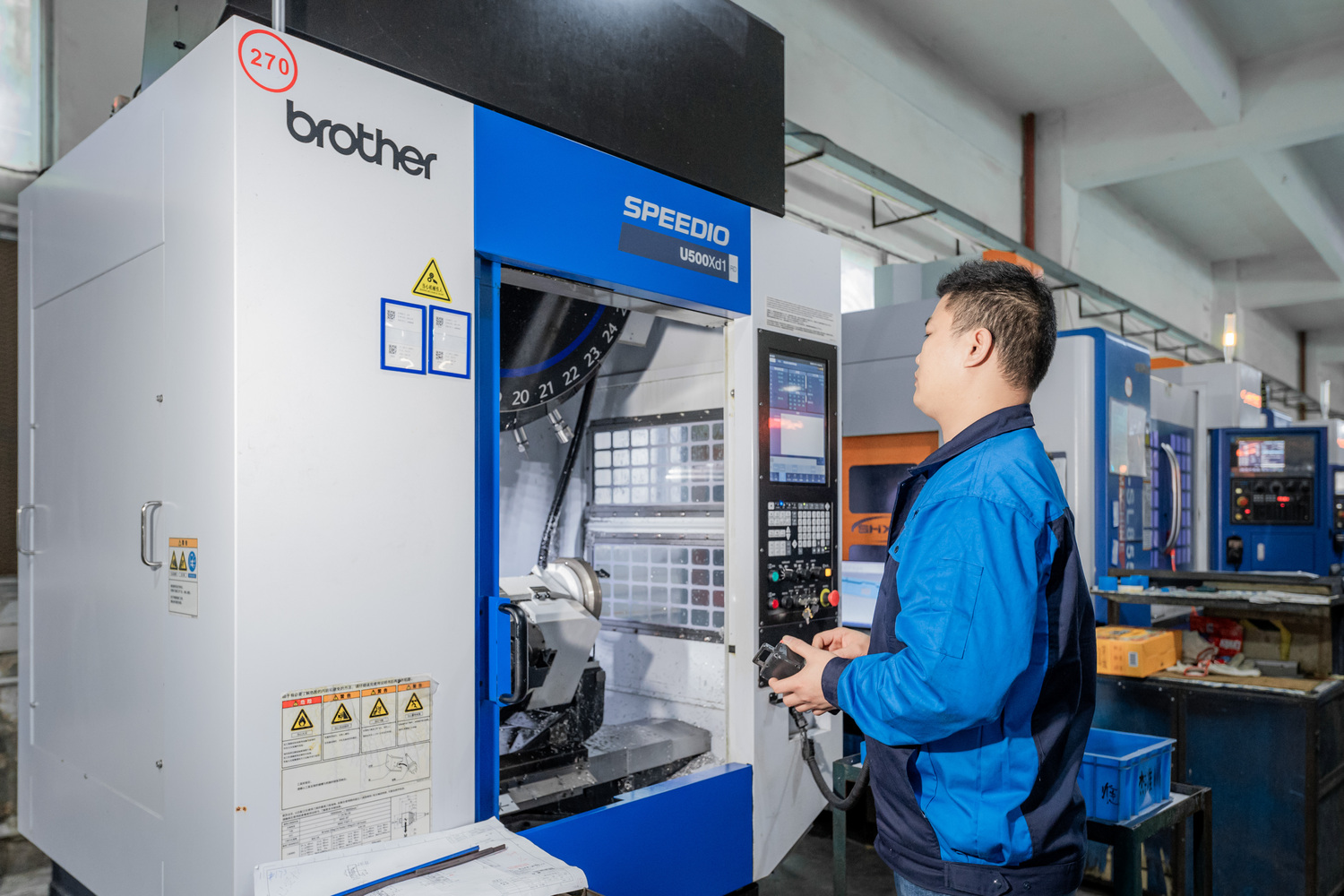 In modern manufacturing, sending a Request for Quotation (RFQ) to a CNC machining supplier is often the first step toward turning a design into a physical product. However, many engineers focus only on price and overlook a critical factor: the supplier’s actual machining capabilities.
Selecting a supplier that lacks the necessary CNC machining capabilities can lead to production delays, inconsistent quality, unexpected costs, and even design revisions. For this reason, evaluating a supplier’s technical strengths before sending an RFQ is an essential step in risk management.
This guide outlines the most important CNC machining capabilities engineers should review before choosing a machining partner, helping ensure your project runs smoothly from prototype to production.
Why Evaluating CNC Machining Capabilities Matters Before RFQ
Not all CNC machining suppliers have the same level of expertise or equipment. Some specialize in rapid prototyping, while others focus on high-volume production. Some excel at aluminum machining, while others are more experienced with difficult materials such as stainless steel or titanium.
If an RFQ is sent to a supplier whose capabilities do not match the project requirements, several issues can arise:
- Long quotation delays due to internal capability review
- Higher manufacturing costs due to inefficient processes
- Increased risk of dimensional errors or surface defects
- Extended production lead times
By performing a basic CNC machining supplier evaluation before sending an RFQ, engineers can quickly identify whether a supplier has the technical infrastructure, experience, and engineering support required for the project.
Machining Accuracy and Tolerance Capability
One of the first factors engineers should evaluate is a supplier’s machining accuracy.
Different CNC machining projects require different tolerance levels. While some industrial components can accept tolerances of ±0.05 mm, high-precision parts used in industries such as semiconductor equipment, aerospace, or medical devices may require tolerances as tight as ±0.005 mm.
Professional suppliers should clearly state their CNC machining tolerance capability, including:
- Standard machining tolerance range
- High-precision machining capability
- Surface finish capability
- Equipment calibration standards
For example, a well-equipped CNC machining facility may offer:
- Standard tolerance: ±0.02 mm
- Precision tolerance: ±0.01 mm or tighter
- Surface finish: Ra 1.6 μm or better
Multi-Axis CNC Machining Capability

Modern CNC machining projects often require complex geometries that cannot be efficiently produced using traditional three-axis machining alone.
A supplier’s multi-axis CNC machining capability is therefore another key evaluation factor.
3-Axis CNC Machining
This is the most common configuration used for simple prismatic parts. It is ideal for basic milling operations and standard mechanical components.
4-Axis CNC Machining
4-axis machines allow the workpiece to rotate during machining, enabling better access to multiple sides of the part without repositioning.
5-Axis CNC Machining
5-axis machining is essential for highly complex parts, such as aerospace components, medical implants, and precision equipment structures.
Material Machining Expertise

Another critical factor when evaluating a CNC machining supplier is their experience with different materials.
Each material presents unique machining challenges. A supplier that frequently works with aluminum may not necessarily have the same expertise when machining hardened steels or titanium alloys.
Common CNC machining materials include:
- Aluminum alloys (6061, 7075)
- Stainless steel (304, 316)
- Tool steel
- Titanium alloys
- Engineering plastics such as POM, PTFE, and PEEK
Production Capacity and Lead Time
Production capability is another important consideration when evaluating a CNC machining partner.
Some suppliers are optimized for prototype work, while others have the infrastructure to support medium or large batch production.
- Number of CNC machines in operation
- Machine types and configurations
- Production shift arrangements
- Automation level
- Typical lead times for different batch sizes
Quality Control and Inspection Systems
Even the most advanced CNC machines cannot guarantee quality without a robust inspection process.
In-Process Inspection
Measurements are taken during machining to detect dimensional deviations early and prevent defective parts from progressing further in production.
CMM Inspection
Coordinate Measuring Machines provide high-precision dimensional verification for complex geometries and tight tolerances.
Final Inspection
Before shipment, parts undergo final quality checks to ensure they meet drawing specifications.
Engineering Support and DFM Capability
A strong machining supplier should not only produce parts but also provide engineering support that improves manufacturability.
This is where DFM (Design for Manufacturability) expertise becomes valuable.
- Identify tight tolerances
- Optimize tool access
- Reduce machining complexity
- Improve cost efficiency
Prototyping and Mass Production Capability
Many projects begin with prototypes before moving into low-volume or mass production.
- Prototype CNC Machining
- Low Volume Manufacturing
- Mass Production CNC Machining
Conclusion: Choosing the Right CNC Machining Partner
Choosing the right CNC machining supplier requires more than simply comparing quotations.
Engineers and procurement teams should evaluate:
- Machining accuracy and tolerance capability
- Multi-axis machining equipment
- Material machining expertise
- Production capacity and lead time
- Quality control systems
- Engineering and DFM support
- Prototype and production capability
A supplier that performs well in these areas is more likely to deliver consistent quality, reliable lead times, and competitive manufacturing costs.
Request a CNC Machining Evaluation
If you are preparing an RFQ for precision CNC machined parts, our engineering team at Kachi Precision Manufacturing can review your drawings and provide professional manufacturability recommendations.
Send us your drawings today for a fast CNC machining quotation and expert engineering support.
Post time: Mar-10-2026


