

Aluminum vs Stainless Steel CNC Machining: Cost, Strength, and Applications (2026 Guide)
Choosing the right material is one of the most important decisions in CNC machining. Two of the most commonly used metals in precision manufacturing are aluminum and stainless steel.
Both materials offer unique advantages depending on the application. Aluminum is lightweight and highly machinable, while stainless steel provides superior strength and corrosion resistance.
In this guide, we compare aluminum vs stainless steel CNC machining in terms of cost, strength, machinability, and typical industry applications.
Aluminum vs Stainless Steel: Key Differences
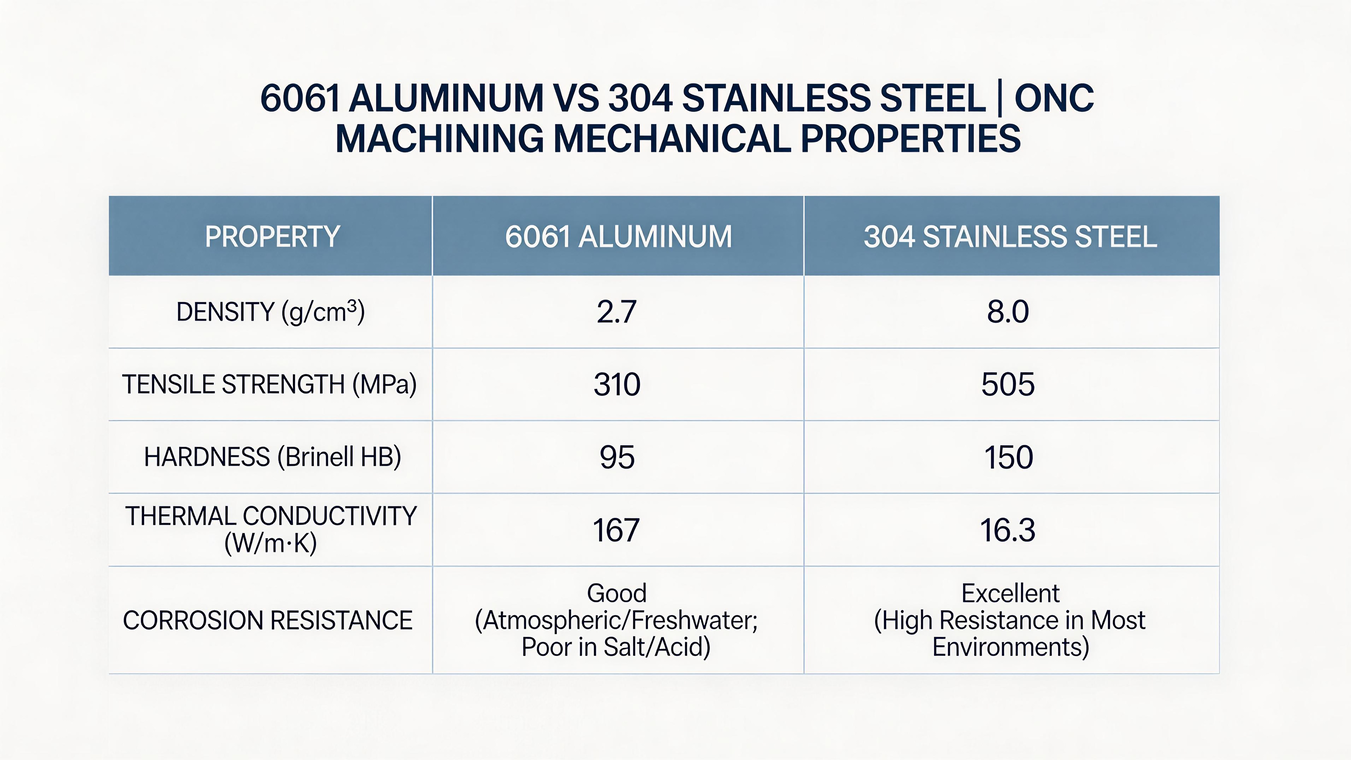
Before selecting a material for CNC machining, engineers typically compare mechanical properties, machining difficulty, and overall cost.
| Property | Aluminum | Stainless Steel |
|---|---|---|
| Density | 2.7 g/cm³ | 7.9 g/cm³ |
| Weight | Lightweight | Heavy |
| Strength | Medium | High |
| Corrosion Resistance | Good | Excellent |
| Machinability | Excellent | Moderate |
| Material Cost | Lower | Higher |
CNC Machining Cost Comparison
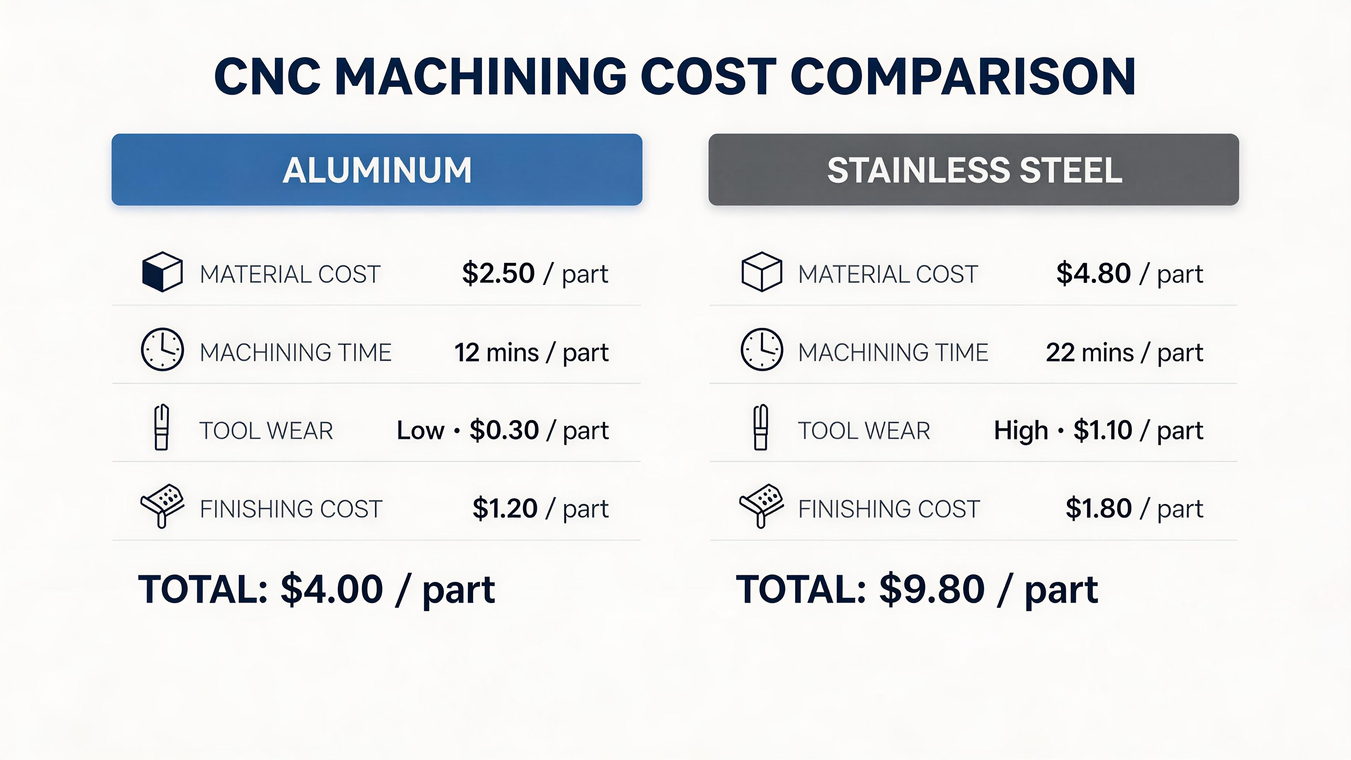
Cost is often the deciding factor when choosing between aluminum and stainless steel for CNC machining.
Aluminum CNC Machining Cost
Aluminum is generally more cost-effective due to its excellent machinability. Cutting tools experience less wear, machining speeds are higher, and cycle times are shorter.
For prototyping and low-volume production, aluminum is often the preferred material.
Stainless Steel CNC Machining Cost
Stainless steel is more expensive to machine because it is harder and generates more heat during cutting. Tool wear increases and machining speeds must be reduced.
As a result, stainless steel parts typically have higher machining costs compared to aluminum.
Strength and Mechanical Properties
When strength and durability are critical, stainless steel often becomes the preferred option.
Aluminum Strength
Although aluminum is lightweight, many alloys such as 6061 and 7075 provide excellent strength-to-weight ratios. This makes aluminum ideal for aerospace and automotive applications.
Stainless Steel Strength
Stainless steel offers superior tensile strength and hardness. It performs better in high-stress environments and is widely used in medical, industrial, and structural components.
Machinability in CNC Manufacturing
Why Aluminum Is Easier to Machine
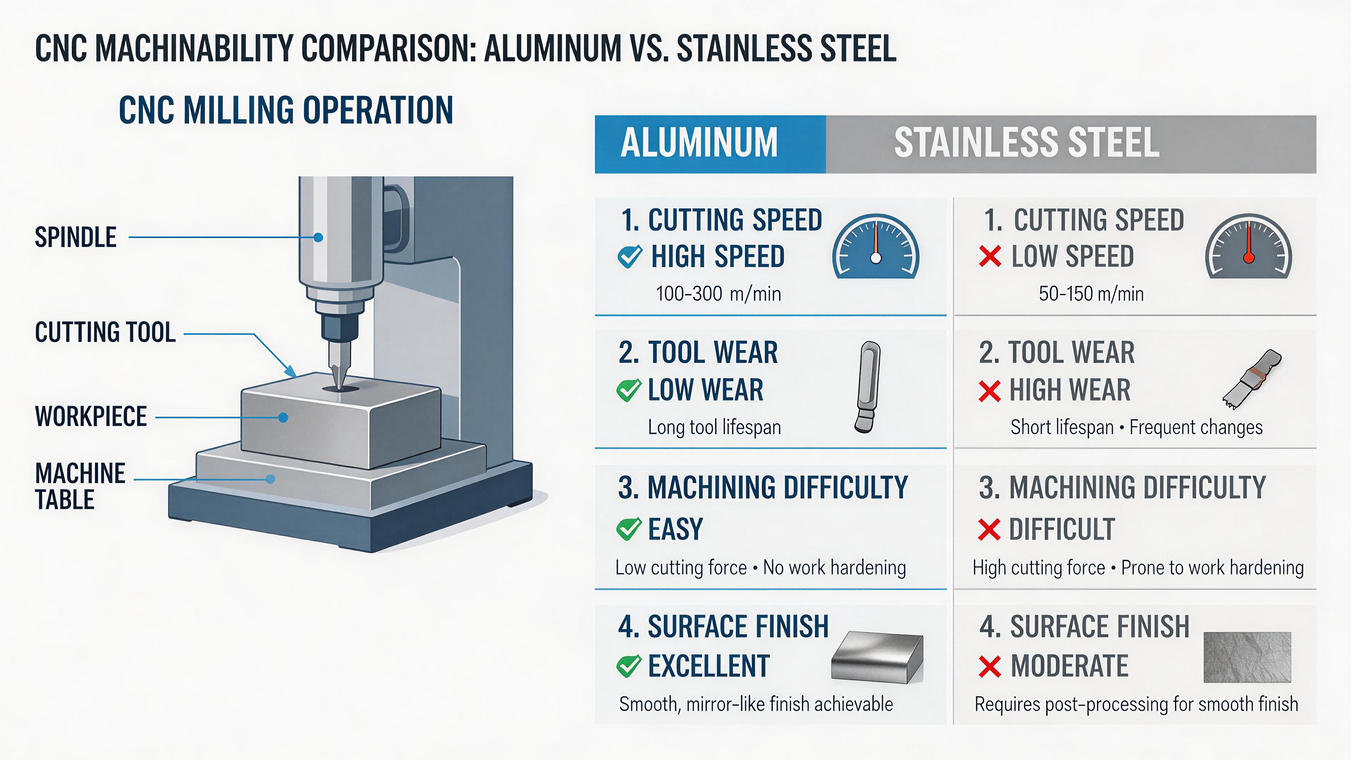
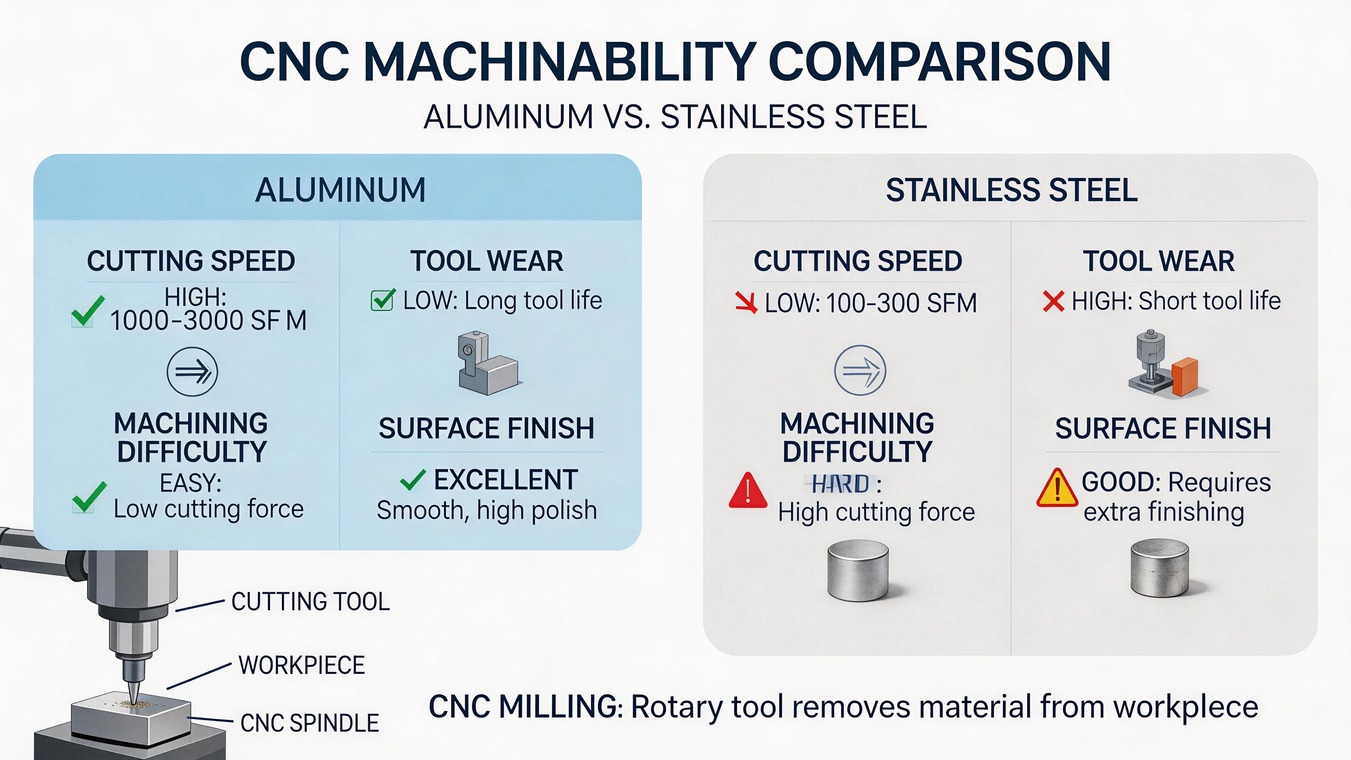
Aluminum is softer and easier to cut, allowing faster machining speeds and improved surface finishes. This reduces production time and tooling costs.
Challenges of Machining Stainless Steel
Stainless steel is tougher and more heat-resistant, which increases tool wear and machining complexity. Advanced tooling strategies and coolant systems are often required.
Common Industry Applications
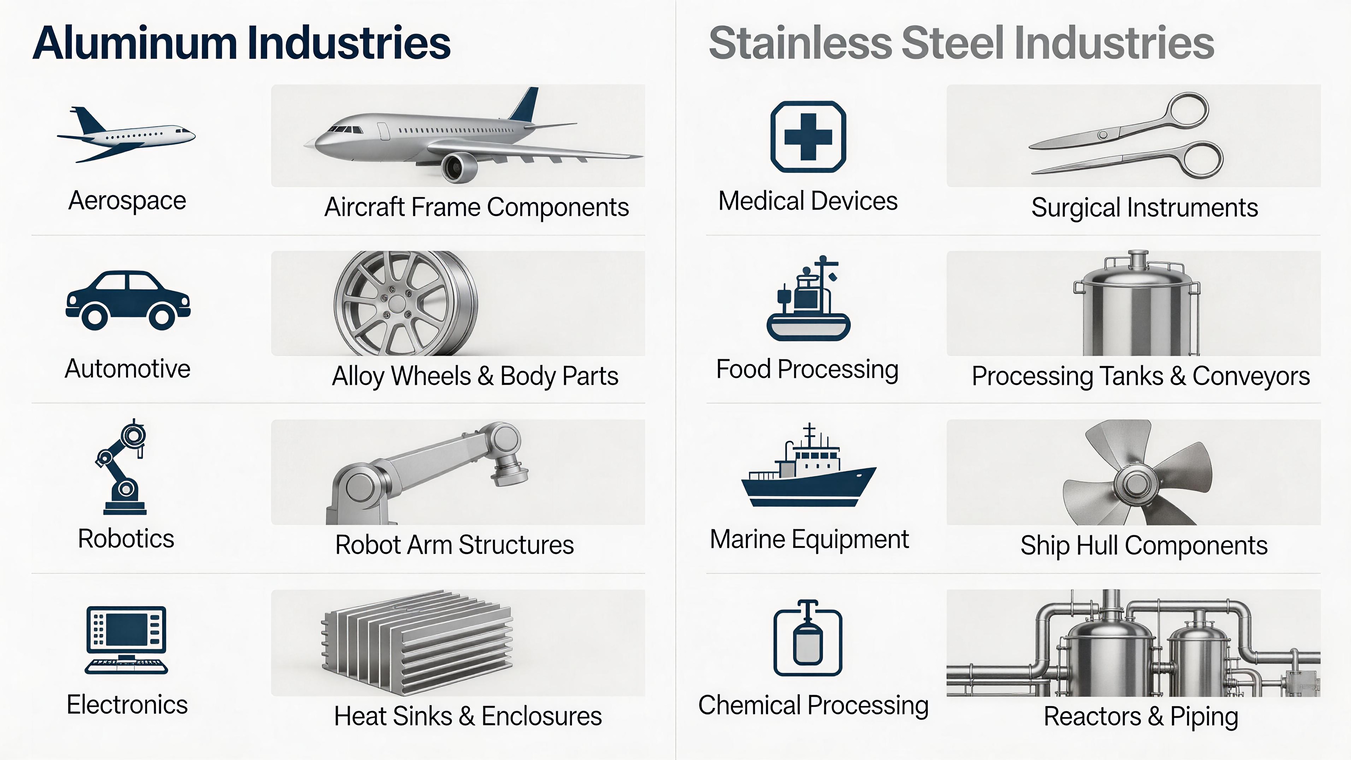
Aluminum Applications
- Aerospace structural components
- Automotive lightweight parts
- Consumer electronics housings
- Robotics and automation equipment
Stainless Steel Applications
- Medical devices
- Food processing equipment
- Industrial machinery
- Marine components
How to Choose the Right Material for CNC Machining
When selecting between aluminum and stainless steel, engineers should evaluate the following factors:
- Weight requirements
- Strength requirements
- Corrosion resistance
- Machining budget
- Production volume
If lightweight and cost efficiency are priorities, aluminum is often the best option. If durability and corrosion resistance are critical, stainless steel may be the better choice.
FAQ: Aluminum vs Stainless Steel CNC Machining
Is aluminum cheaper to machine than stainless steel?
Yes. Aluminum is easier to machine, which reduces machining time, tool wear, and overall production cost.
Which material is stronger?
Stainless steel generally offers higher tensile strength and hardness compared to aluminum.
Why do aerospace industries prefer aluminum?
Aluminum provides an excellent strength-to-weight ratio, making it ideal for aircraft components and lightweight structures.
Can stainless steel be CNC machined easily?
Yes, but it requires slower cutting speeds and specialized tooling due to its hardness and heat resistance.
Need precision CNC machining for aluminum or stainless steel parts? Contact our engineering team to get a fast quote within 24 hours.
Post time: Mar-16-2026


