

7 Common CNC Machining Mistakes That Increase Cost and Lead Time (2026 Guide)
 CNC machining is one of the most widely used manufacturing methods for producing precision components across industries such as automation, semiconductor equipment, robotics, aerospace, and industrial machinery.
However, many companies experience unexpected cost increases and delayed delivery during CNC machining projects. In most cases, these problems are not caused by machining limitations but by design decisions, incomplete documentation, or communication gaps between engineering teams and suppliers.
This guide outlines seven common mistakes that increase CNC machining costs and lead times—and how to avoid them.
Why CNC Machining Mistakes Affect Cost and Lead Time
Precision CNC machining relies on clear technical communication and manufacturable design. When designs are complex or documentation is incomplete, suppliers must spend additional time evaluating the project before production begins.
- Additional engineering review cycles
- Conservative quoting assumptions
- Complex machining setups
- Extended inspection procedures
Mistake 1: Applying Tight Tolerances Everywhere
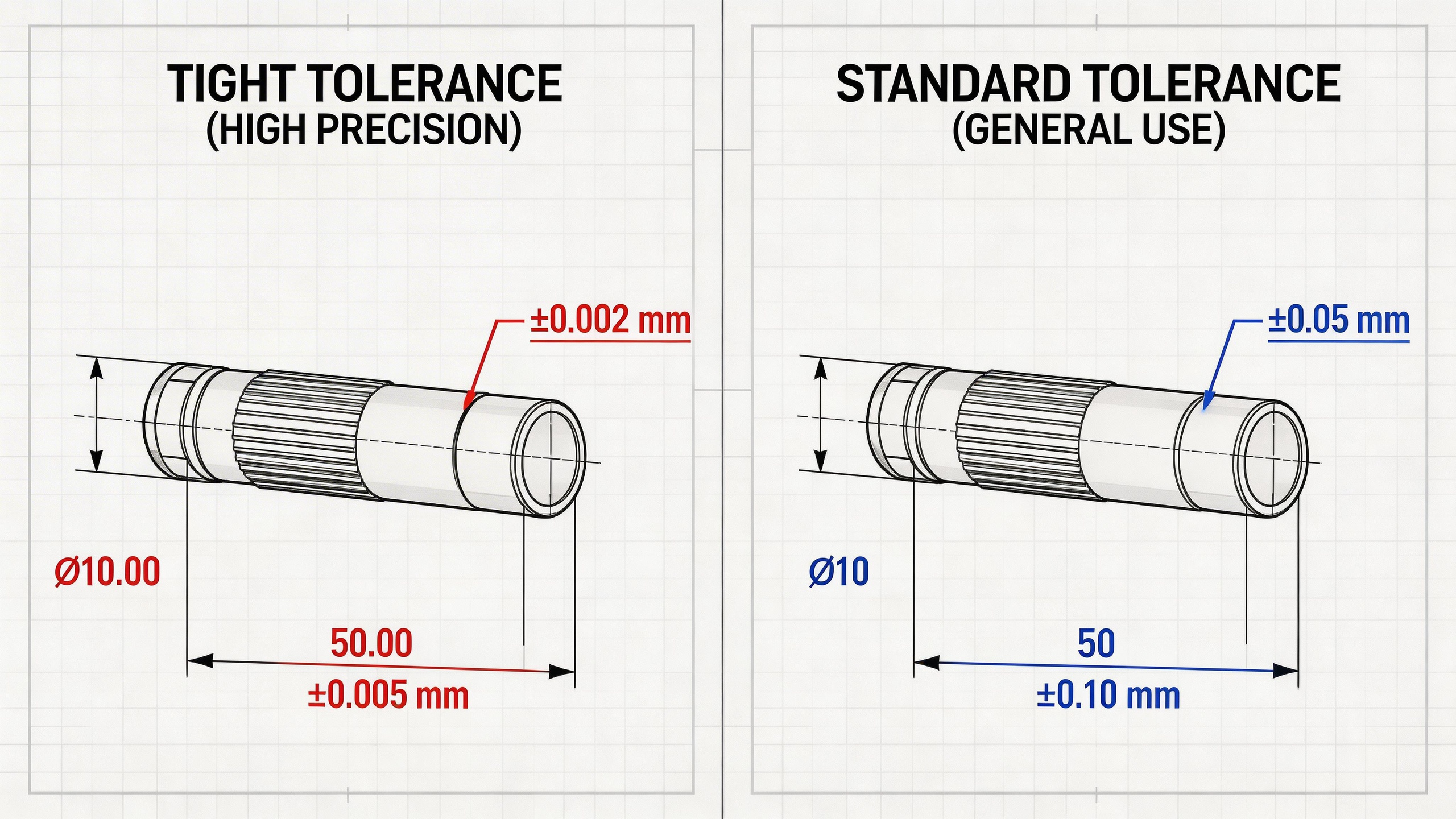
Many engineers specify tight tolerances across the entire part to ensure precision. However, this dramatically increases machining complexity and inspection time.
Tight tolerances should only be applied to features that directly affect function or assembly.
Mistake 2: Designing Deep Cavities and Narrow Slots
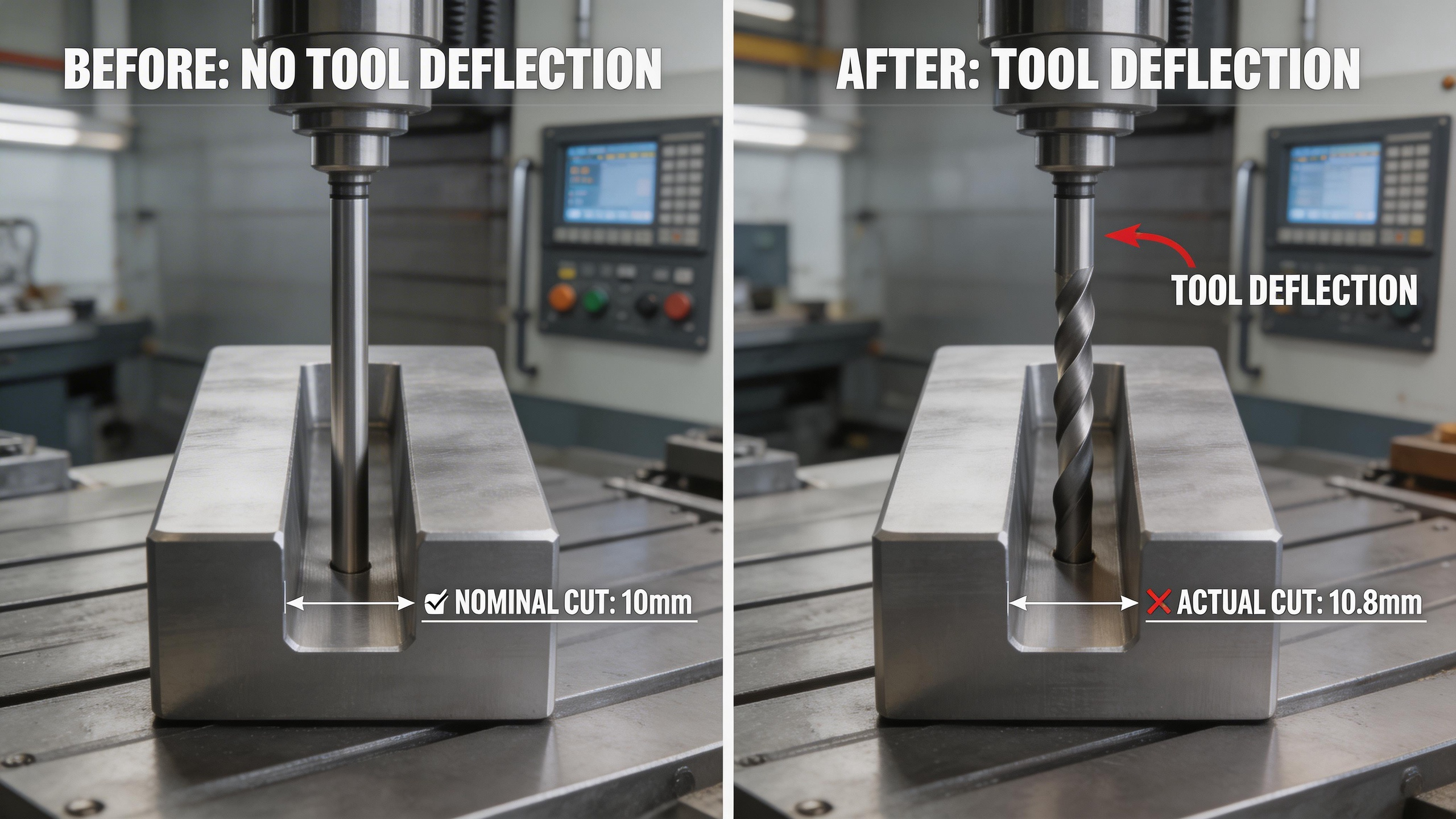 Deep cavities and narrow slots are difficult to machine efficiently. As tool length increases, tool rigidity decreases, leading to vibration and slower cutting speeds.
A common guideline is to keep pocket depth within three times the pocket width whenever possible.
Mistake 3: Sharp Internal Corners
CNC milling tools are round, which means perfectly sharp internal corners cannot be produced without extremely small tools or secondary processes such as EDM.
Adding internal corner radii compatible with standard end mills improves manufacturability and reduces cost.
Mistake 4: Ignoring Standard Tooling Sizes
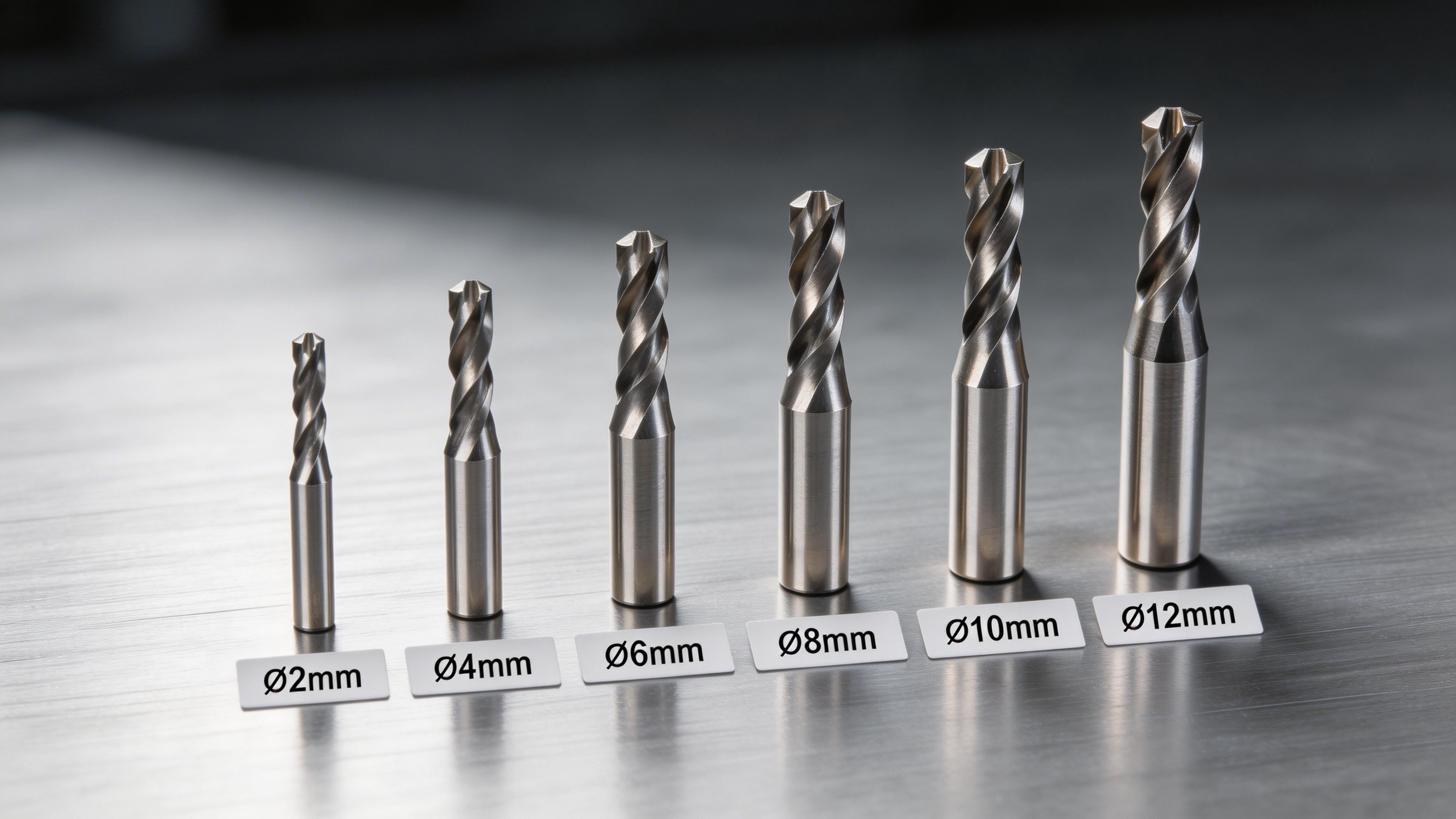 Designing features that do not align with standard cutting tool sizes increases machining time and tooling requirements.
Whenever possible, align holes, slots, and internal radii with standard drill and end mill sizes.
Mistake 5: Overly Complex Geometry
Complex part geometry often requires multiple setups or advanced multi-axis machining. This increases programming time, fixturing complexity, and machining cycle time.
Simplifying geometry or splitting parts into modular components can often improve manufacturability.
Mistake 6: Undefined Surface Finishing
Surface finishing requirements such as anodizing, polishing, or plating must be specified during the quoting stage.
Missing finishing information often leads to quote revisions or production delays.
Mistake 7: Skipping DFM Review
Design for Manufacturability (DFM) review helps identify potential machining challenges before production begins.
A DFM review can reveal issues such as unnecessary tight tolerances, complex geometry, and non-standard features.
Best Practices for Cost-Efficient CNC Machining
- Apply tight tolerances only where necessary
- Avoid deep pockets and narrow slots
- Use standard tooling sizes
- Simplify complex geometry
- Define finishing requirements clearly
- Request DFM review before production
 Conclusion
Many CNC machining delays and cost overruns are preventable with better design decisions and clearer communication between engineering teams and manufacturing suppliers.
By understanding these common mistakes and incorporating manufacturability considerations early in the design process, companies can significantly improve production efficiency and reduce project risk.
Need Support with CNC Machining Design or Quoting?
Experienced CNC machining suppliers can provide valuable engineering insight during the quoting stage. At Kachi Precision Manufacturing, our engineering team reviews customer drawings to identify manufacturability improvements and help reduce machining complexity before production begins.
This collaborative approach helps customers achieve more predictable costs, faster lead times, and reliable part quality.
Post time: Mar-06-2026


